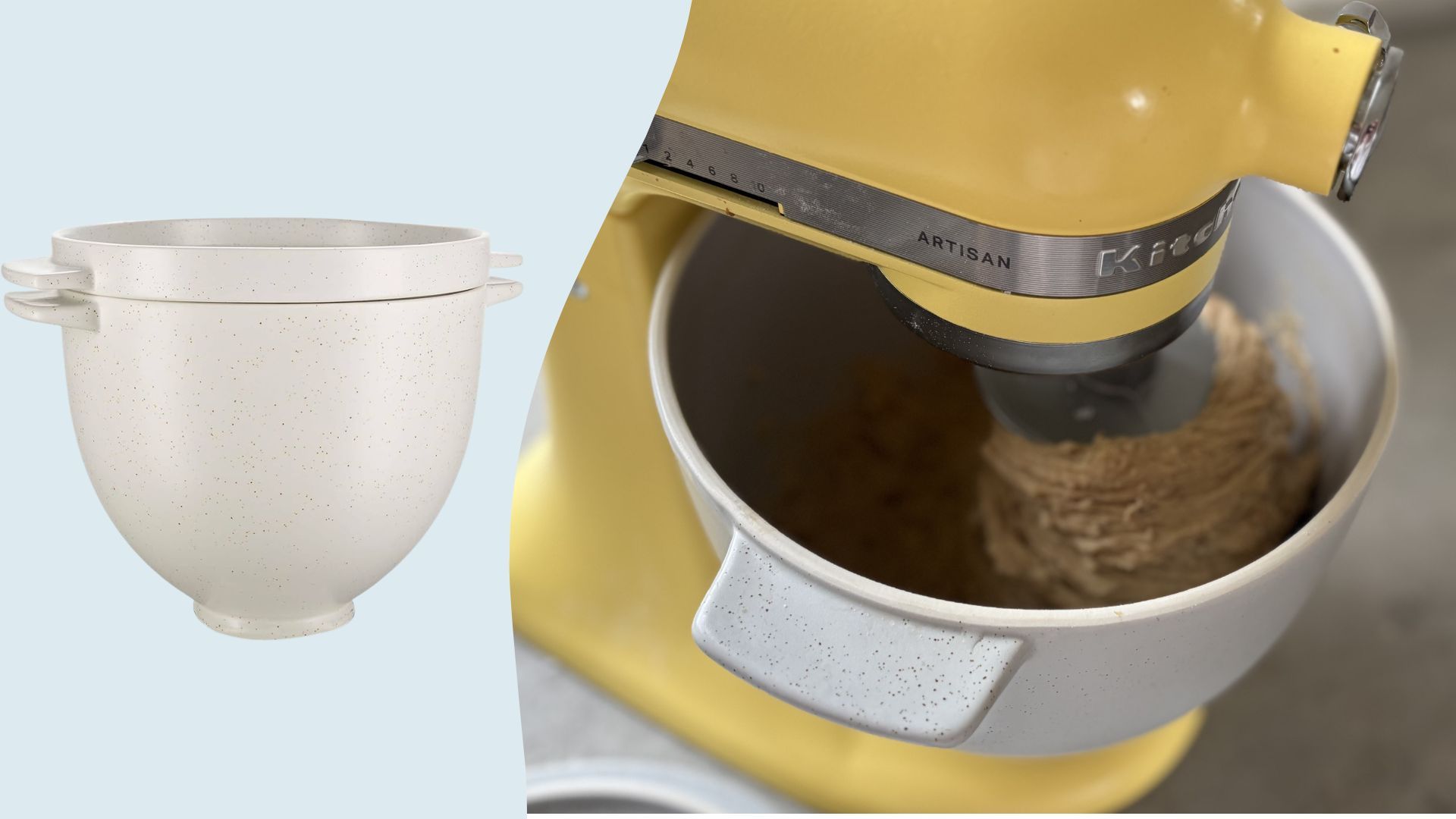
I know I shouldn’t have favourites, but I love my KitchenAid Stand Mixer more than anything in my kitchen. It’s the appliance that lives on the counter, polished, primed, and permanently ready for action. I baby it. It gets the best cleaning routine, the best ingredients, and the most attention. I even treated it to the extra-special accessory that everyone keeps under wraps: the KitchenAid Bread Bowl.
Everything you need to know about the KitchenAid Bread Bowl Accessory
(Image credit: Future)
|
Dimensions |
190mm (H) x 226mm (W) x 310mm (D) |
|
Weight |
3.7 kgs |
|
Capacity |
4.7L |
|
Suitable for |
freezer, oven, microwave, dishwasher |
|
Max temp |
260°C |
|
Materials |
Titanium-reinforced ceramic (chip-resistant) |
|
Warranty |
5 year |
What is a bread bowl or a bread oven?
(Image credit: Future)
If you’ve been baking in a standard loaf tin, you might be surprised to learn that there’s a method that delivers a crisper crust, superior oven spring, and a lighter, more open crumb.
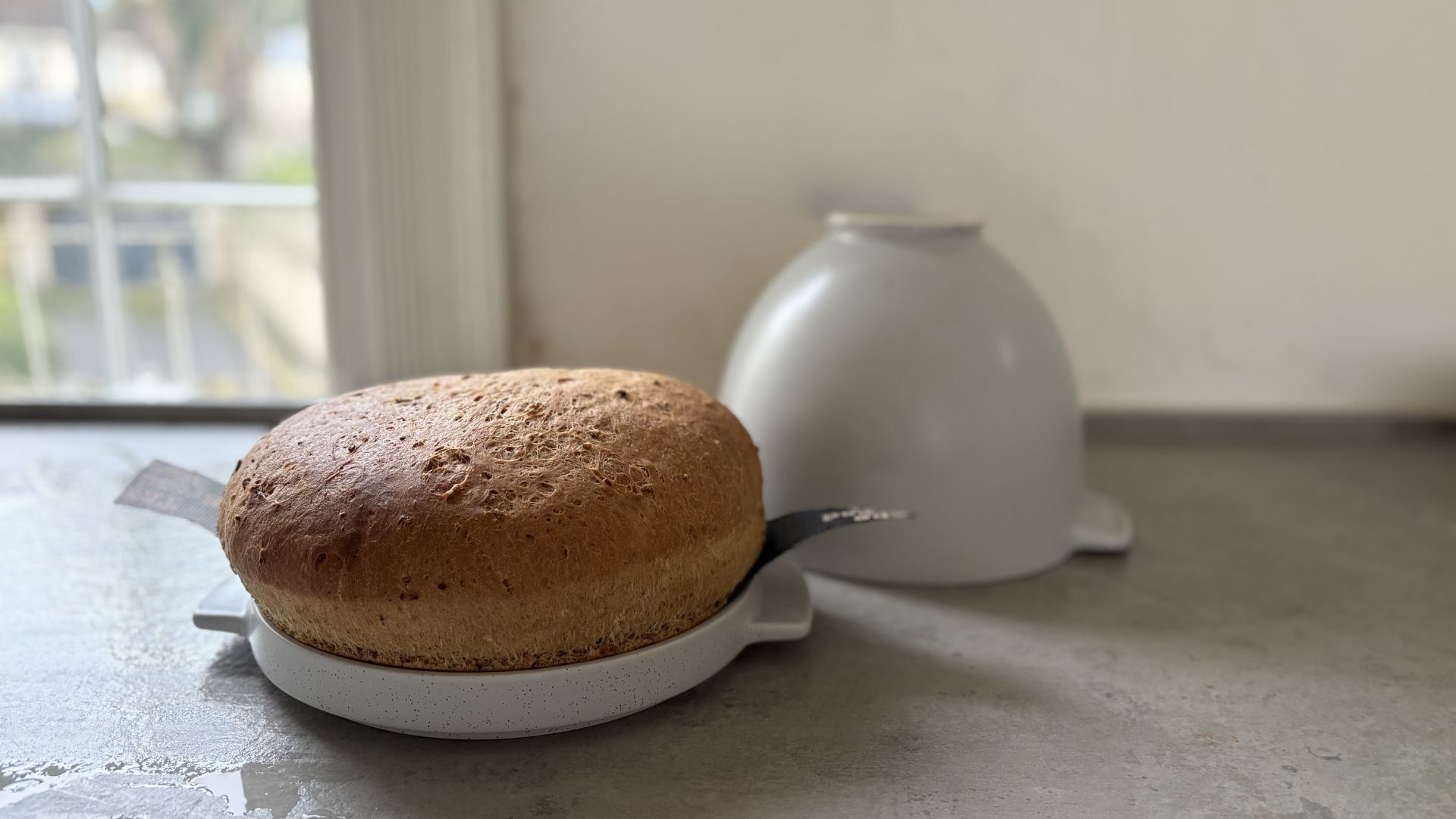
A bread oven works like an “oven within an oven”. The cast iron base absorbs and radiates intense, even heat, while the domed lid traps steam released from the dough during the first phase of baking. That steam is crucial: it keeps the bread crust soft long enough for maximum oven spring, encourages proper gelatinisation of starches, and results in a blistered, glossy crust once the lid is removed. In short, you get a better rise; thinner, cracklier crust; and moist, aerated crumb with well-developed structure.
If you’ve ever been frustrated by dense centres or pale, lacklustre loaves, this one shift in technique can transform your results.
Who would the KitchenAid Bread Bowl Accessory suit?
(Image credit: Future)
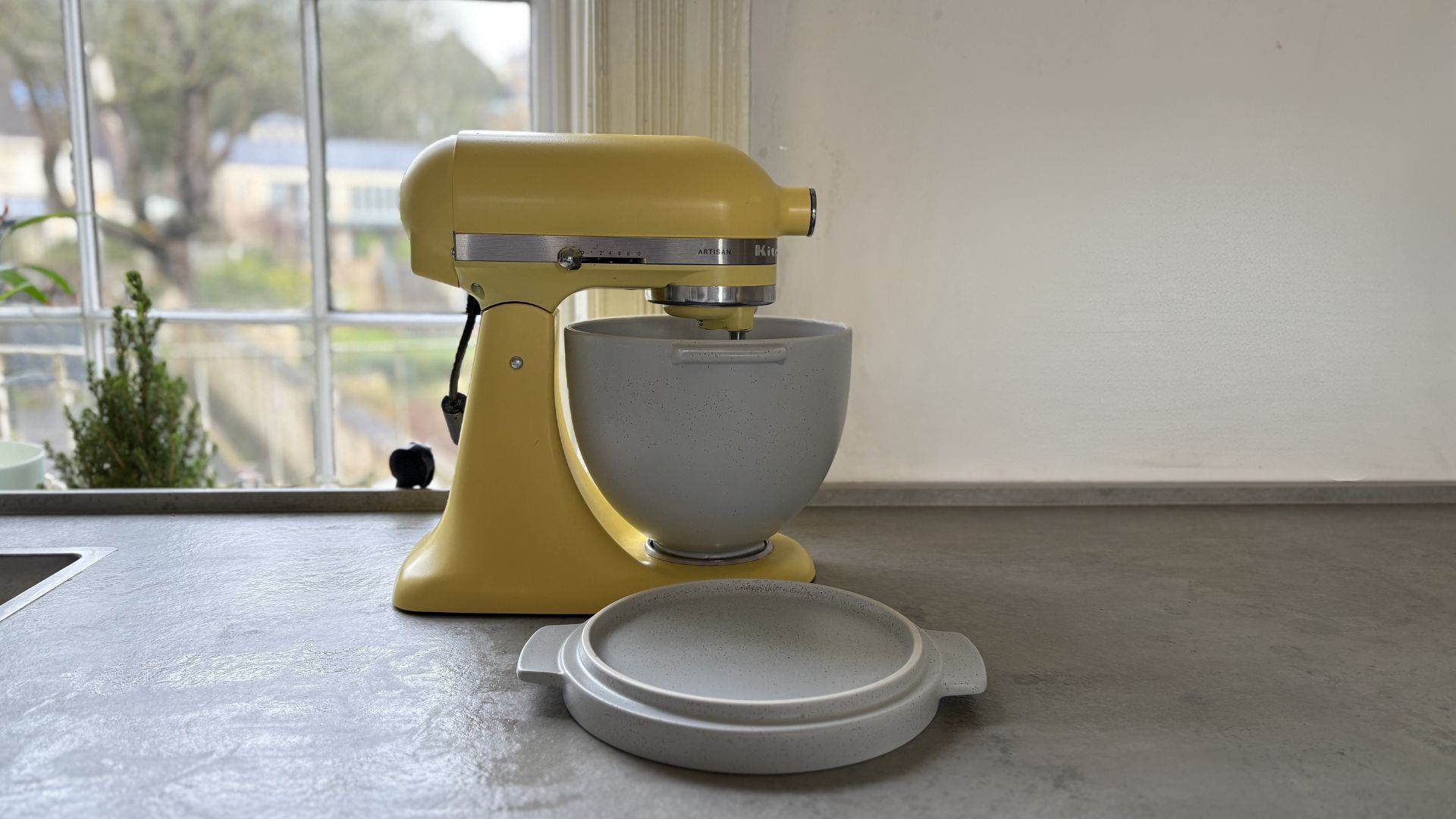
KitchenAid isn’t the only brand making excellent bread ovens, but they are the only ones to integrate the vessel directly into the kneading and proving process. You can mix, knead, rise, rest, and bake all in the same bowl. That means fewer temperature fluctuations, less handling (which protects your gluten structure), and (blissfully) less washing up.
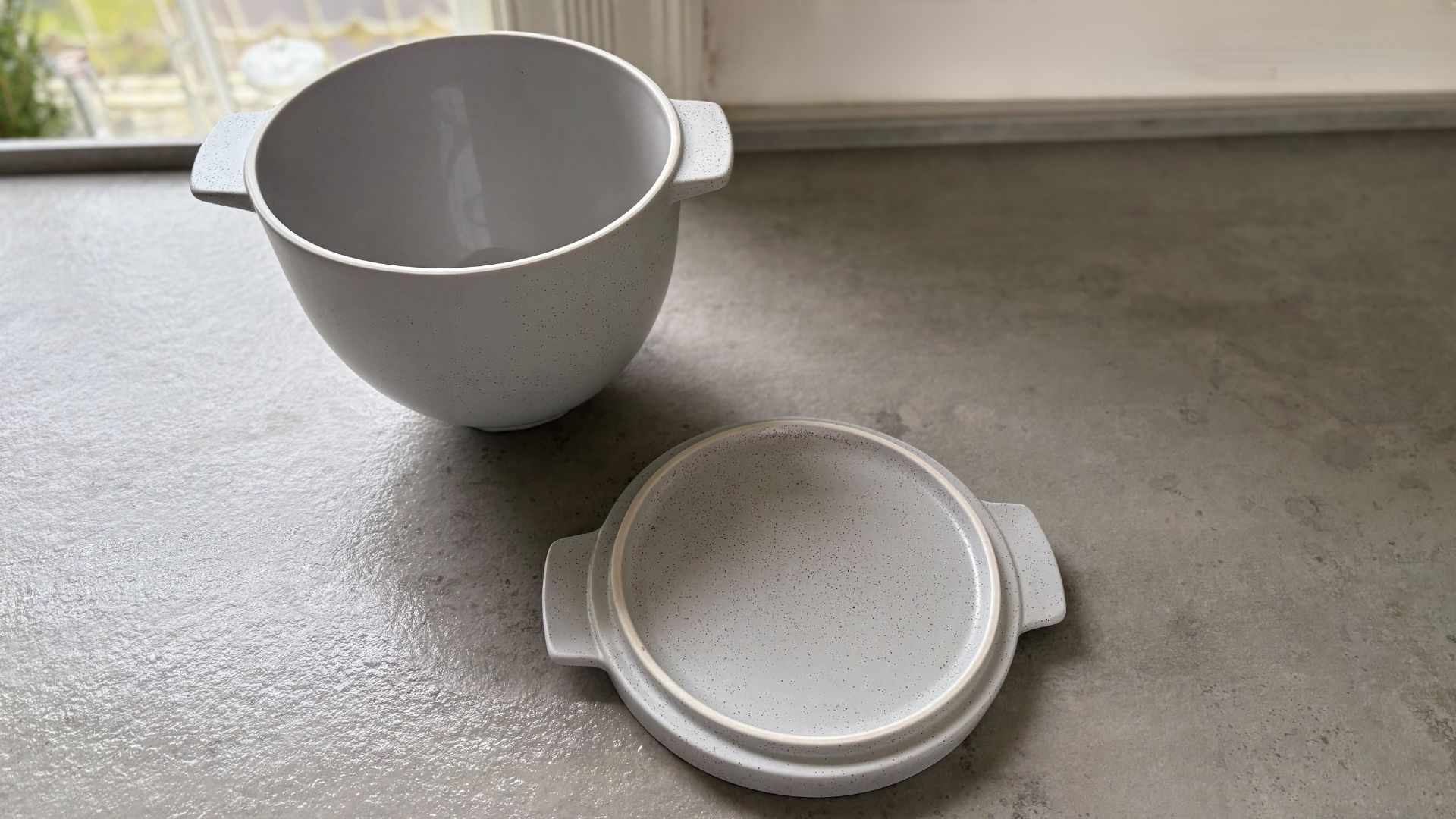
To the untrained eye, the KitchenAid Bread Bowl looks like another KitchenAid mixing bowl. It has the brand’s signature shape, a speckled ceramic exterior, and a matching lid. But the moment you lift it, you realise this is something entirely different.
At its core, it’s titanium-reinforced ceramic. And it’s heavy. That weight isn’t accidental. The blend of ceramic and titanium offers exceptional thermal mass and heat retention. Once preheated, it maintains a stable, high temperature, which is critical for consistent oven spring and crust development. The domed lid is engineered to trap steam efficiently, replicating the professional deck-oven environment artisan bakers chase.
The interior is enamelled, which makes it smoother and more forgiving than raw cast iron, which you’ll find in other bread ovens. The ceramic also means that you won’t need to season it, and it’s far less temperamental when it comes to cleaning. It feels serious.
What is the KitchenAid Bread Bowl Accessory like to use?
(Image credit: Future)
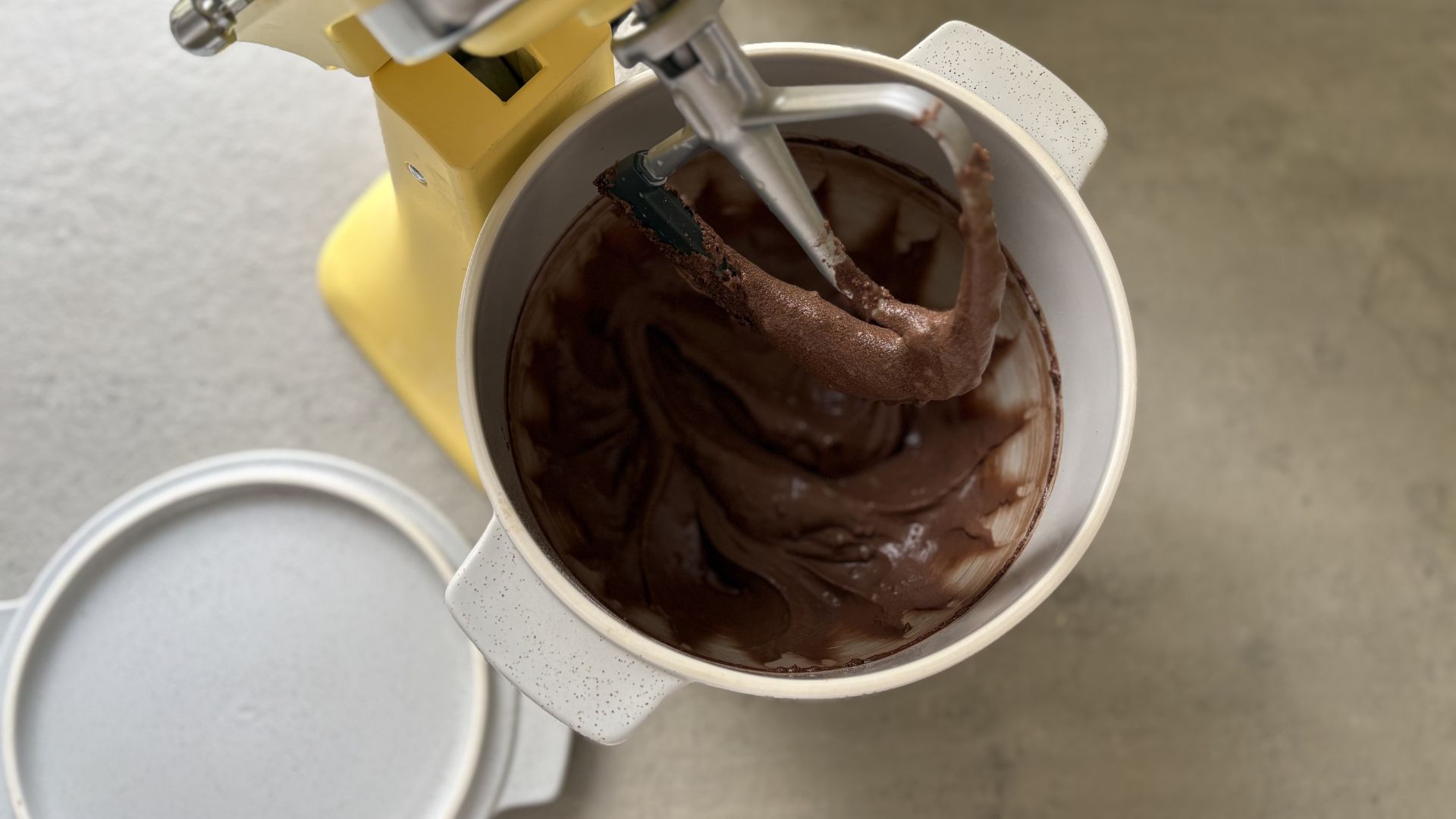
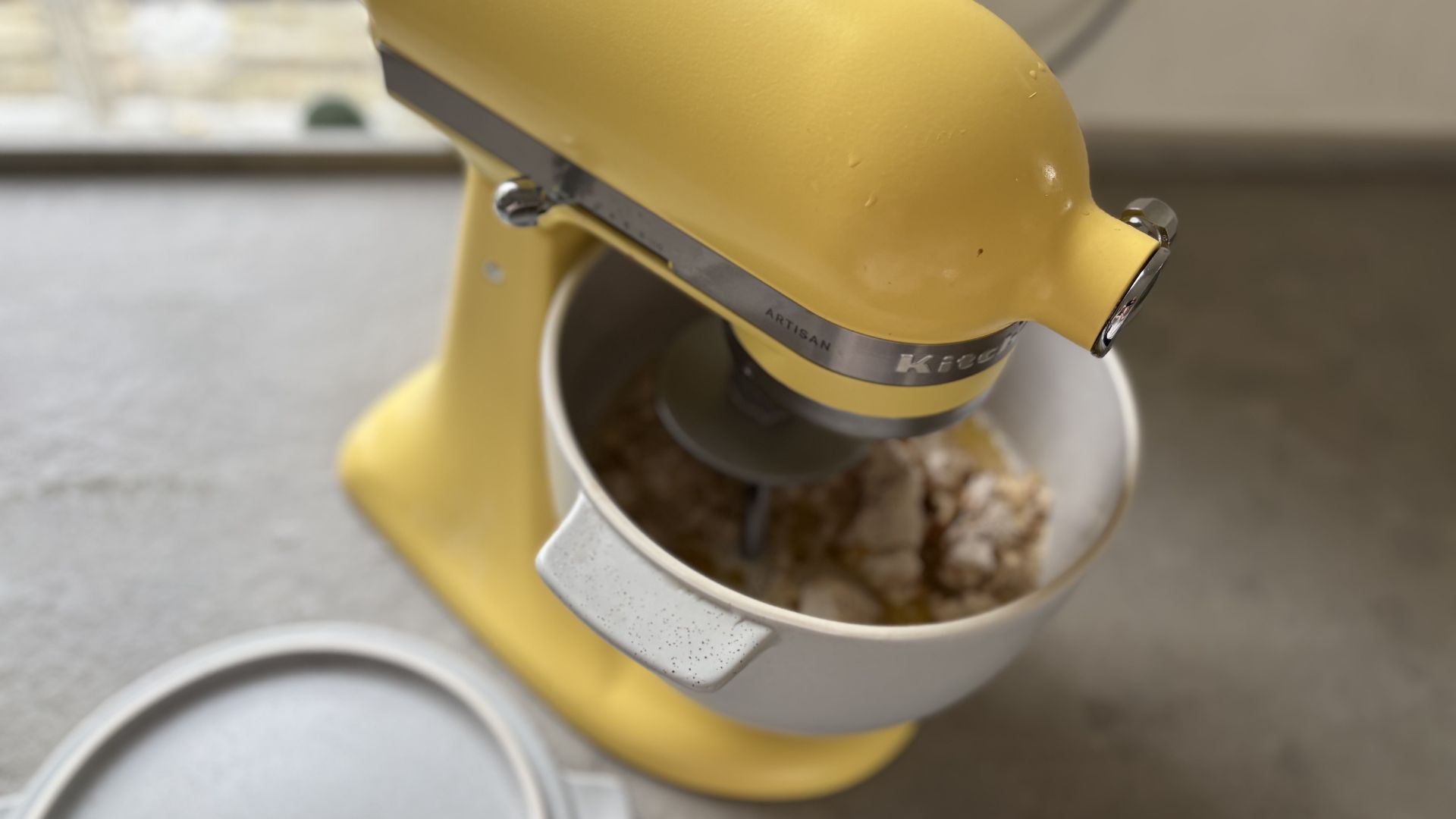
First things first: this is not a lightweight mixing bowl. Compared to KitchenAid’s stainless steel or ceramic bowls, the Bread Bowl is noticeably heavier. You can absolutely whip cream or mix cake batter in it, I tested both, and it performs perfectly, but you’ll feel the weight when you’re scraping out brownie batter and trying to keep hold of the bowl with one hand. It’s manageable, just not delicate or elegant.
(Image credit: Future)
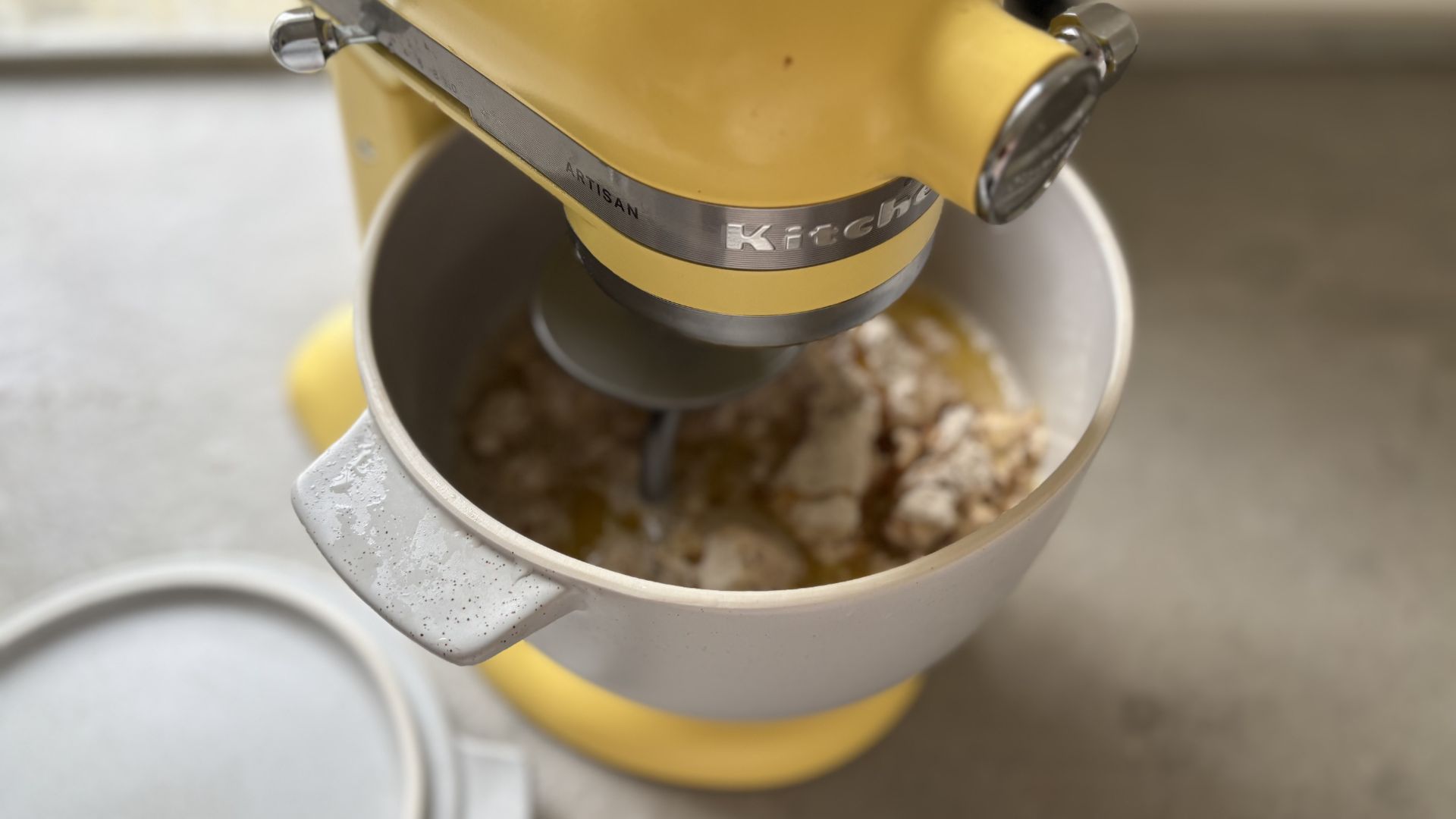
Where the KitchenAid Bread Bowl truly shines is, rather unsurprisingly, bread. Over the past year, I’ve made everything from high-hydration focaccia to sticky cinnamon rolls and dense, nutty rye loaves in this bowl. Not having to knead by hand for enriched or wetter doughs is a gift. The dough hook develops gluten beautifully, and because you’re proving in the same vessel, you retain warmth and consistency throughout fermentation.
Even when a recipe doesn’t require the baking lid, I often choose to mix and let my bread rise in the bowl. The ceramic retains ambient warmth, creating a stable proving environment. I consistently get strong, even rises with excellent structure. Here are just two of my favourite ways to use the KitchenAid Bread Bowl:
Making a classic loaf with the KitchenAid Bread Bowl
(Image credit: Future)
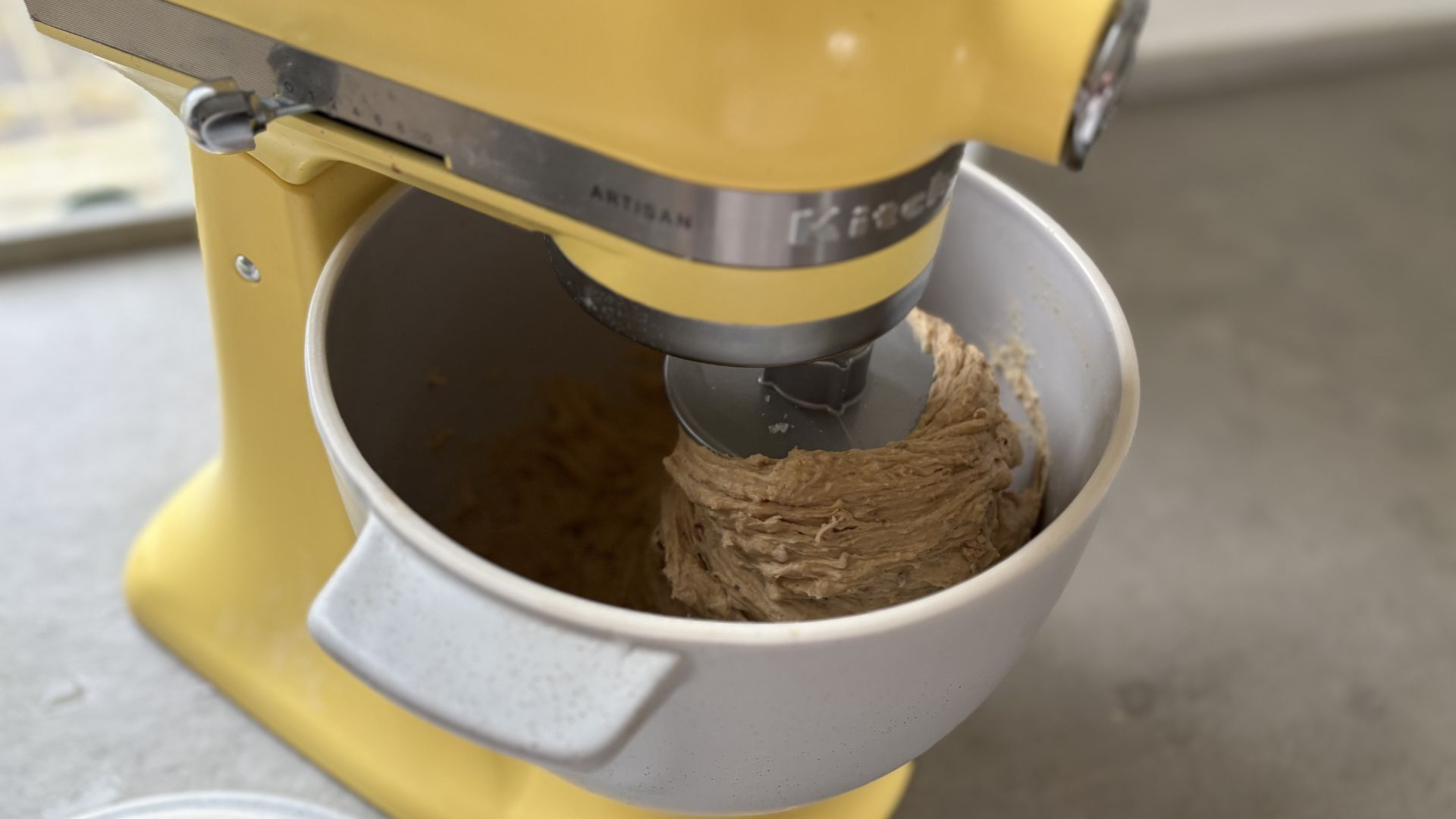
This bowl really earns its keep with higher-hydration doughs. My go-to country loaf sits at 77% hydration: wet enough to encourage an open crumb but structured enough to handle confidently.
I go through all the usual stand mixer motions to begin with, adding on flour, water, salt, and yeast. Then, I knead with the dough hook until it’s smooth and elastic. I look for a strong windowpane test, Great British Bake Off Style.
Once I’m happy with the dough, I leave it to rise in the bowl for an hour, or until it has doubled in size. At this point, I take my dough out and sit it on a bread mat whilst the entire bread bowl warms up in the oven for 20 minutes at full temperature.
Next, I carefully transfer the shaped dough (where the baking mat stars), cover it with the bowl, and bake with the lid on for 20 minutes.
Then, I remove the lid and bake until the bread has that deep, golden crust colour. And the results speak for themselves: I get a dramatic oven spring, crisp crust, and beautifully light crumb.
One important note: this is a tall bread oven. If your oven cavity is compact or your shelves are fixed, you may need to remove a rack to accommodate it safely. And invest in serious oven gloves: this thing gets ferociously hot.
Making cinnamon rolls with the KitchenAid Bread Bowl
(Image credit: Future)
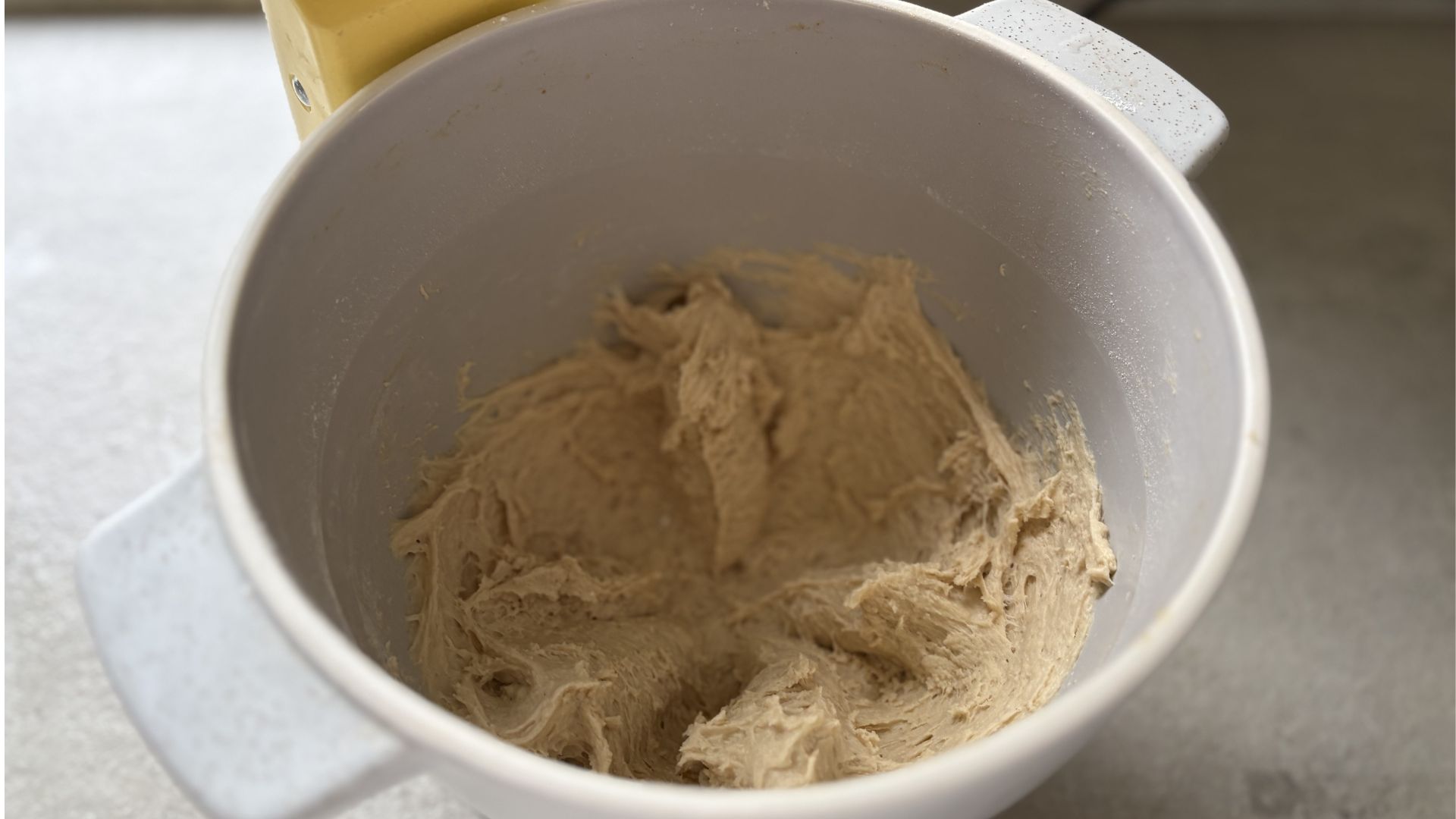
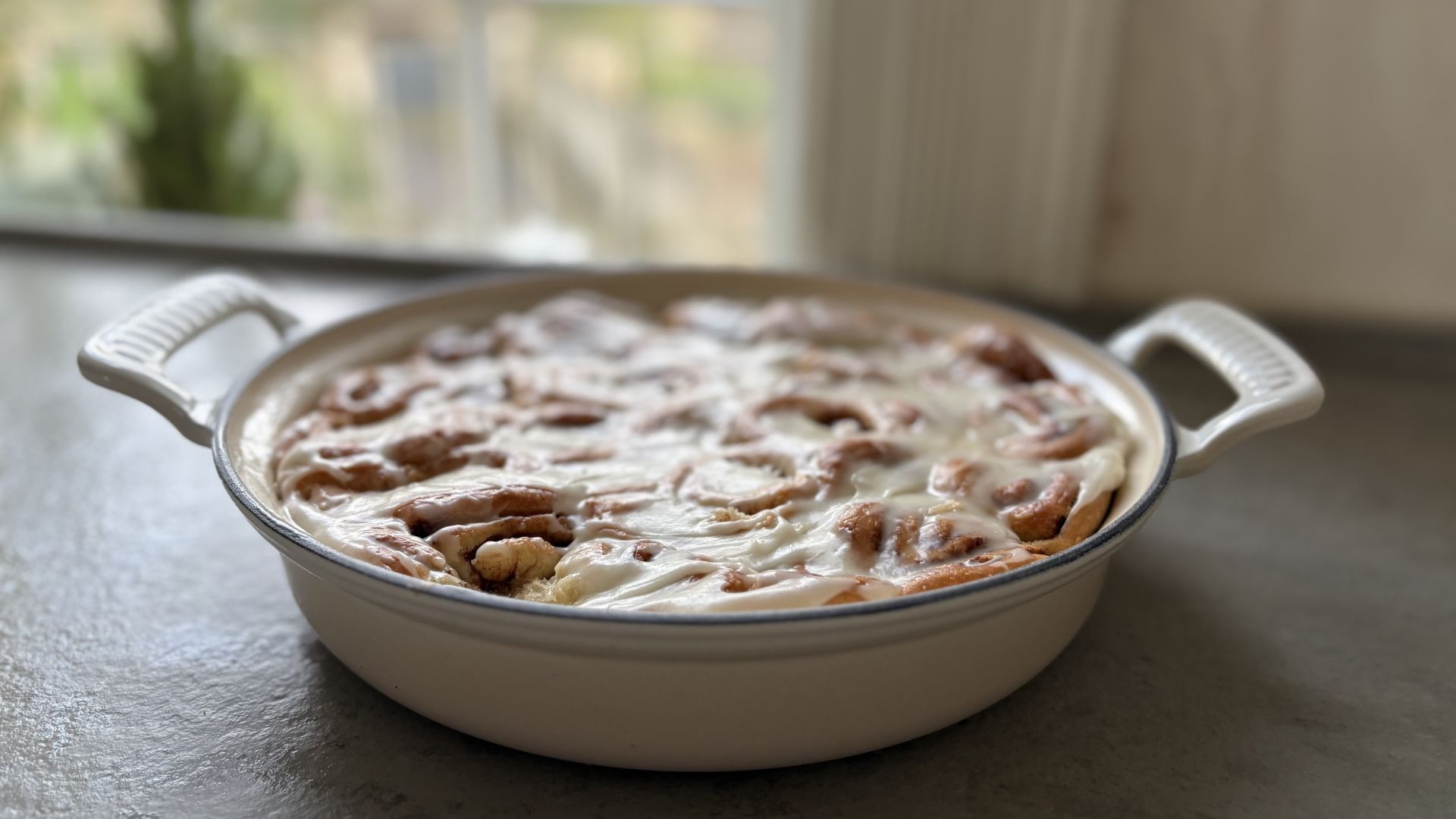
Enriched doughs benefit hugely from the mixer-and-bowl combo. Cinnamon roll dough is sticky and butter-heavy, which can be frustrating to knead by hand. The mixer handles it effortlessly, developing structure without overworking the fat.
(Image credit: Future)
I’ve found the dough proves exceptionally well in the cast iron bowl: it retains gentle warmth, creating a consistent environment. Often I transfer the rolls to a skillet for baking (for that defined edge and slightly crisp base), the Bread Bowl produces a beautifully even bake with soft centres and golden tops, but doesn’t always hold the buns as well.
How does the KitchenAid Bread Bowl Accessory compare?
(Image credit: Future)
This isn’t the only bread oven with impressive credentials, and it won’t suit everyone. The Le Creuset Cast Iron Bread Oven is slightly more compact and may be easier to fit into smaller ovens. If you don’t own a KitchenAid mixer, it’s also the more logical standalone choice.
But if you already have a KitchenAid stand mixer, the integration is what makes this special. Mixing, kneading, proving, and baking in one vessel isn’t just convenient, it supports better superior rising and reduces handling. That’s a technical win, not just a practical one.
Should you buy the KitchenAid Bread Bowl Accessory?
(Image credit: Future)
If you own a KitchenAid mixer, or know someone who does, this is one of the smartest upgrades you can make. It’s not a novelty accessory. It’s a genuinely well-engineered piece of bakeware that improves technique, consistency, and results. You’ll use it far more than you expect, and once you taste that crust, you’ll wonder how you ever baked without it. For keen home bakers, it’s a joy. For aspiring artisan bread obsessives, it’s a game changer.