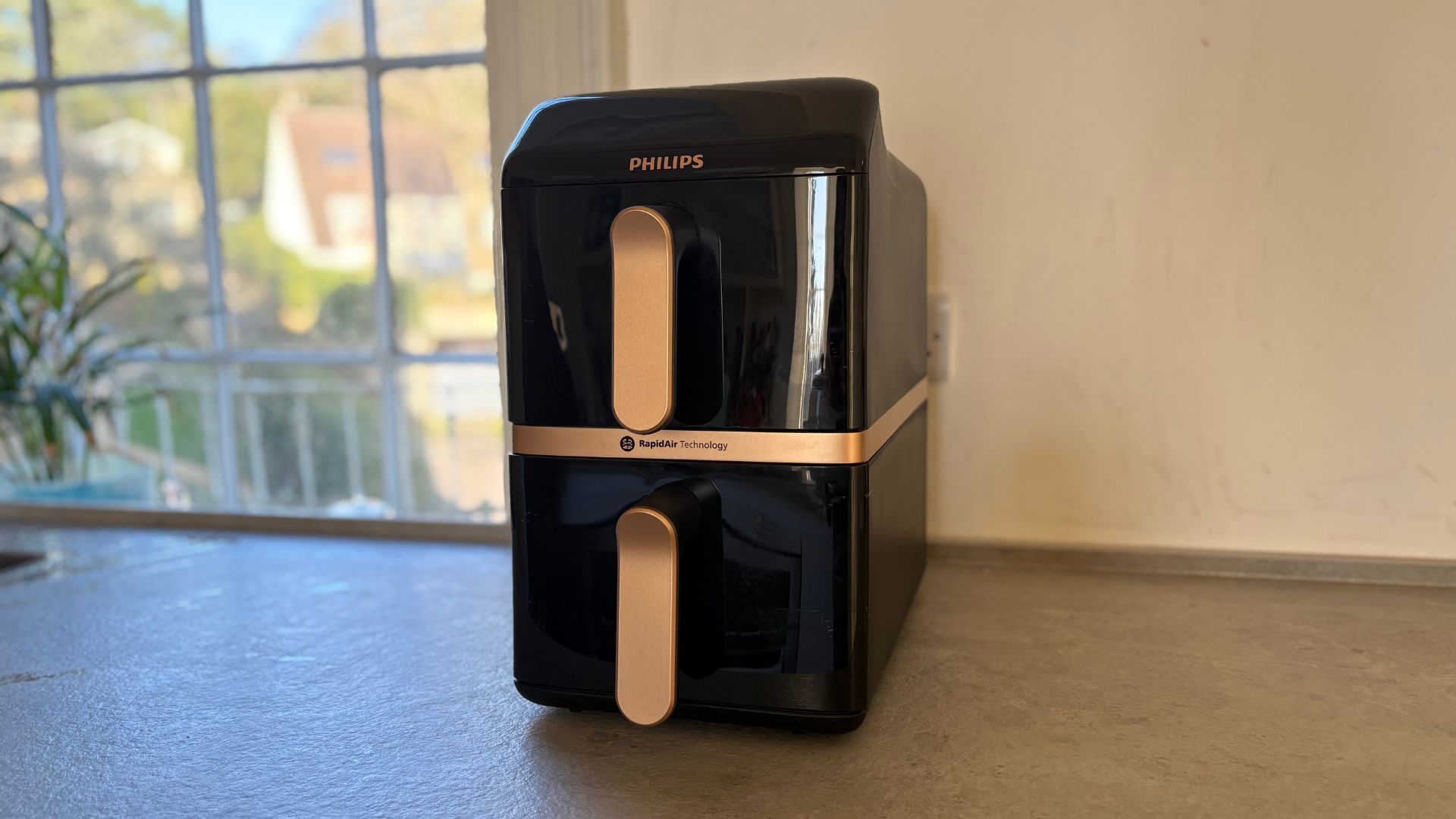
The biggest trend in air fryers right now is vertical living. Brands are moving away from wide, sprawling designs that dominate your worktop and instead stacking baskets upwards and, as with most things in the kitchen, some brands are doing it far better than others. One that really stands out is Philips.
Credited with creating the original air fryer, Philips has serious form when it comes to designing appliances that actually work for real homes. Whether you’re searching for the best air fryer, the best air fryer for a family, or something that won’t completely take over your kitchen, Philips tends to deliver quietly confident, well-thought-out designs. The Philips 4000 Series Stacked Dual Basket Air Fryer is their latest take on the tower-style format and after testing it thoroughly, it’s one of my favourites so far.
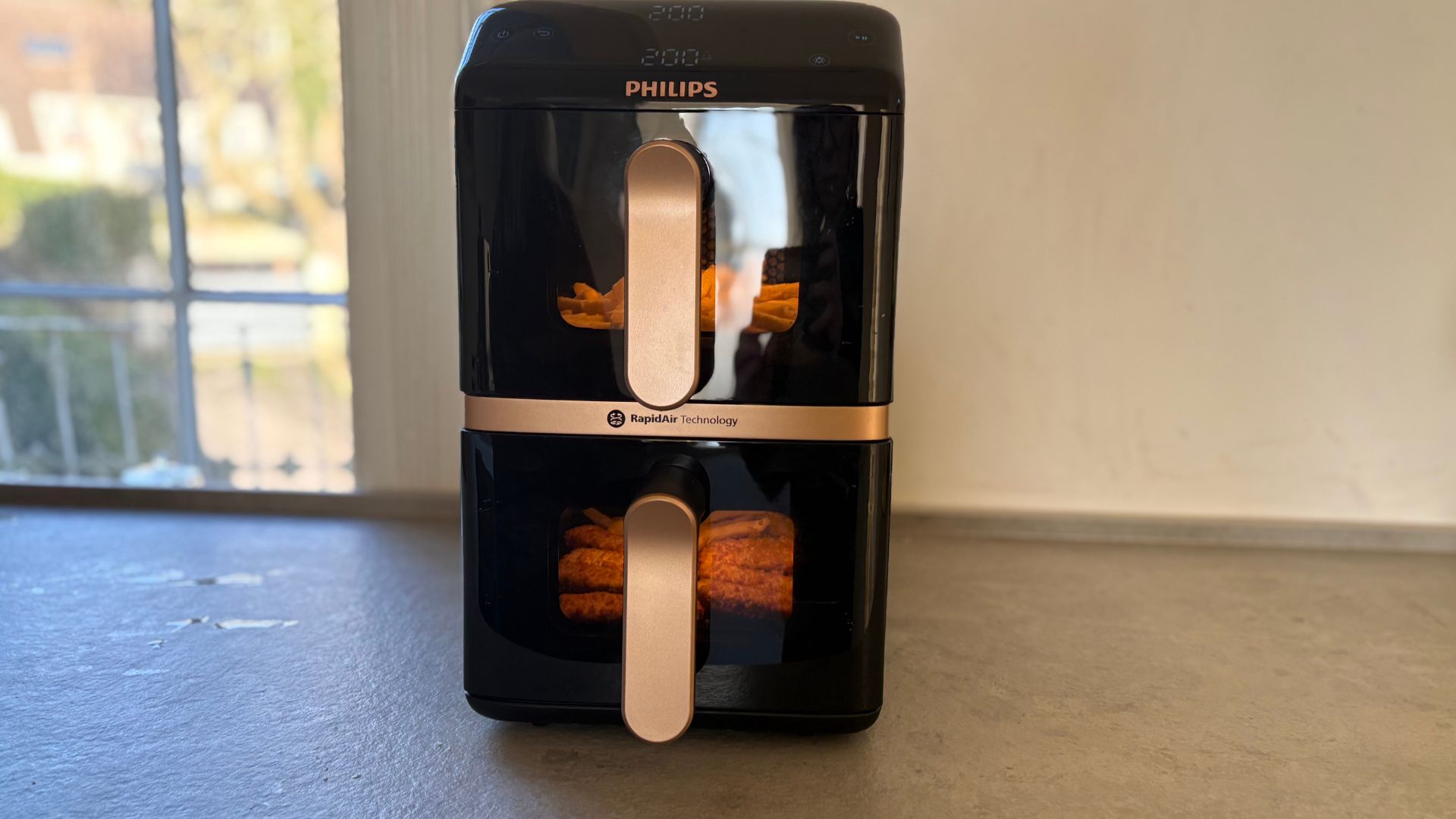
It takes the popular stacked (or tower) design, one basket neatly sitting on top of the other, and adds those signature Philips touches that make daily cooking feel easier, calmer and far more intuitive. It’s not flashy, but it is very clever, which is exactly what I want from an air fryer I’m going to use several times a week.
Philips 4000 Series Stacked Dual Basket Airfryer review
(Image credit: Future)
- RRP: £269.99
- Dimensions: 46.9D x 23.3W x 39.9H centimetres
- Weight: 8.98 kgs
- Capacity: 10L
- Settings: Fry, Bake, Roast, Reheat
- Power: 2750 watts
- Non-stick: ceramic coating
Who would the Philips 4000 Series Stacked Dual Basket Airfryer suit?
(Image credit: Future)
With its generous capacity, the Philips 4000 Series Stacked Dual Basket Air Fryer is a brilliant option for families or anyone regularly cooking for more than two people. During testing, I easily cooked eight fish fingers alongside a full tray of chips in under 20 minutes and that was using just one basket. Spread across both drawers, it has the kind of capacity that genuinely earns it a place among the best air fryers for a family.
The two drawers work independently and come with genuinely useful pre-sets, so you don’t need to be an air-frying expert to get good results. I could cook different foods at different temperatures at the same time without having to hover nervously nearby, which is ideal for busy weeknight dinners.
That said, while this is a stacked design made to save width, it’s still a fairly tall appliance. I wouldn’t recommend it for very small kitchens, single-person households, or homes with low wall cupboards, as it may not slide neatly underneath.
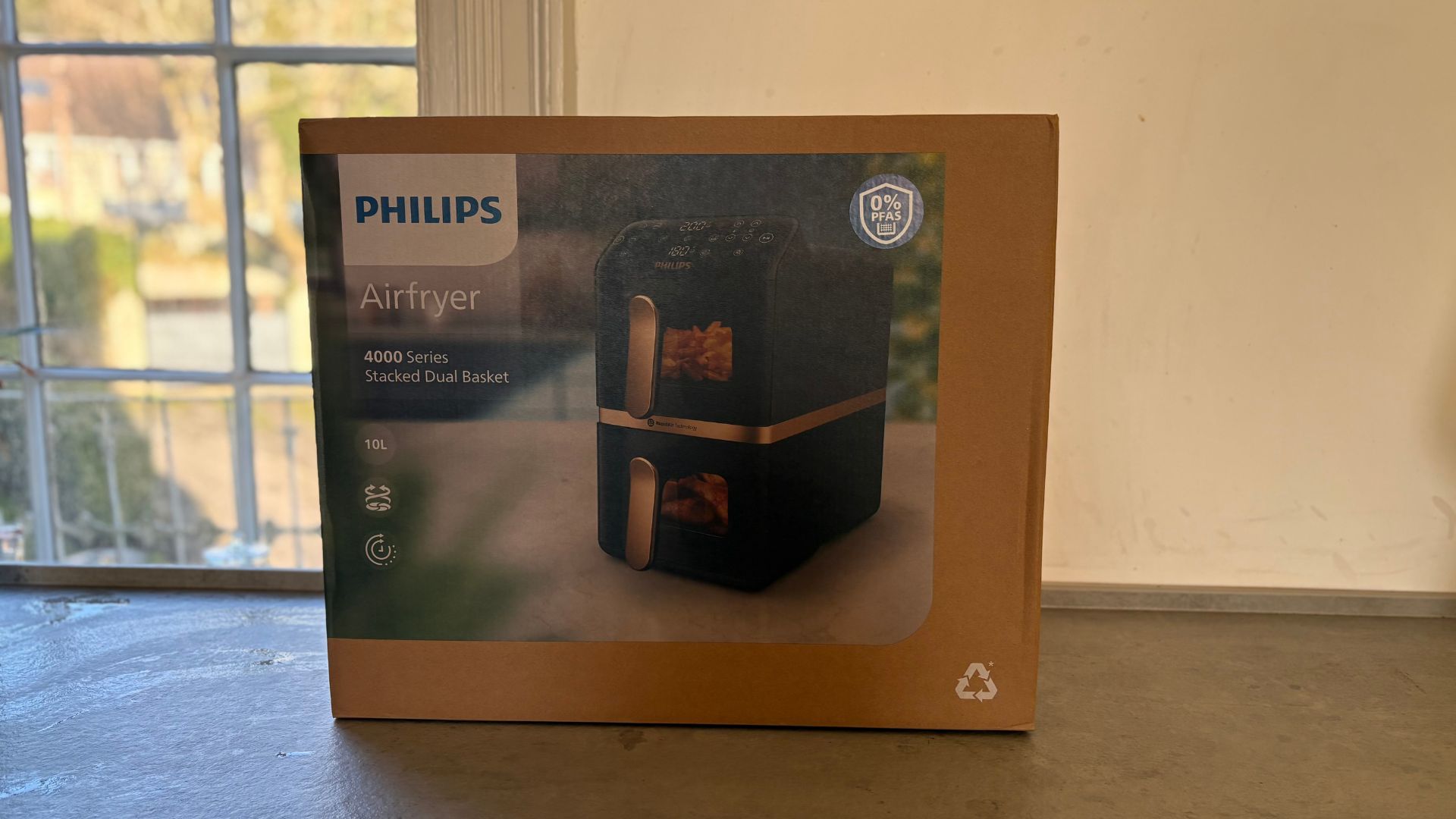
Unboxing the Philips 4000 Series Stacked Dual Basket Airfryer
(Image credit: Future)
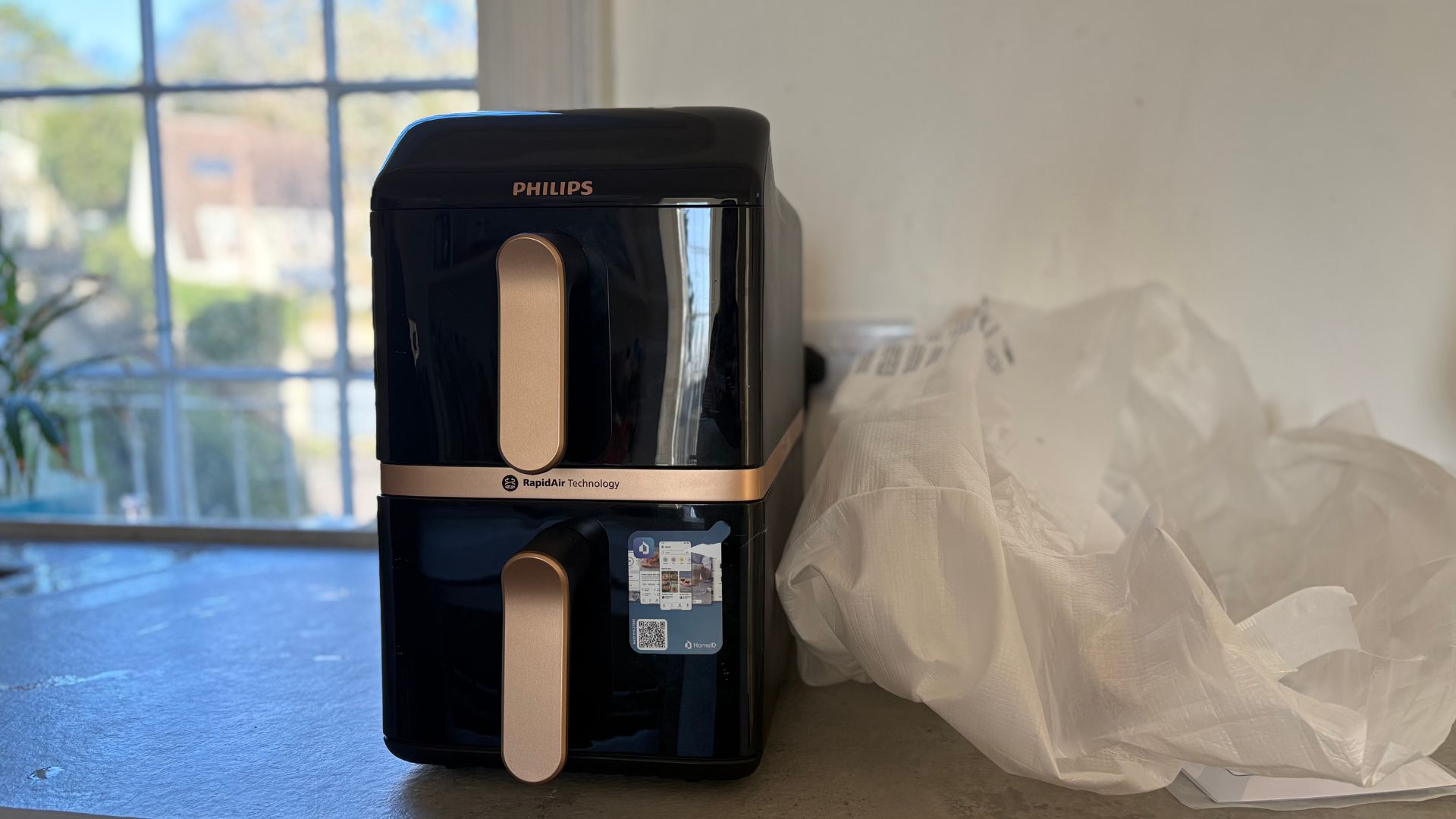
Philips is excellent at packaging, perhaps a little too excellent. The box is large and heavy, but everything inside arrived in pristine condition, with no dents, scratches or loose parts.
Most of the packaging is cardboard and can be flattened and recycled easily, which I always appreciate. There are some soft plastic elements that will need taking to a supermarket recycling point, but overall it’s relatively eco-conscious.
One thing to flag: Philips secures the drawers with stickers to prevent movement in transit. It’s sensible, but it does leave behind some sticky residue that needs careful removal before first use.
What is the Philips 4000 Series Stacked Dual Basket Airfryer like to use?
(Image credit: Future)
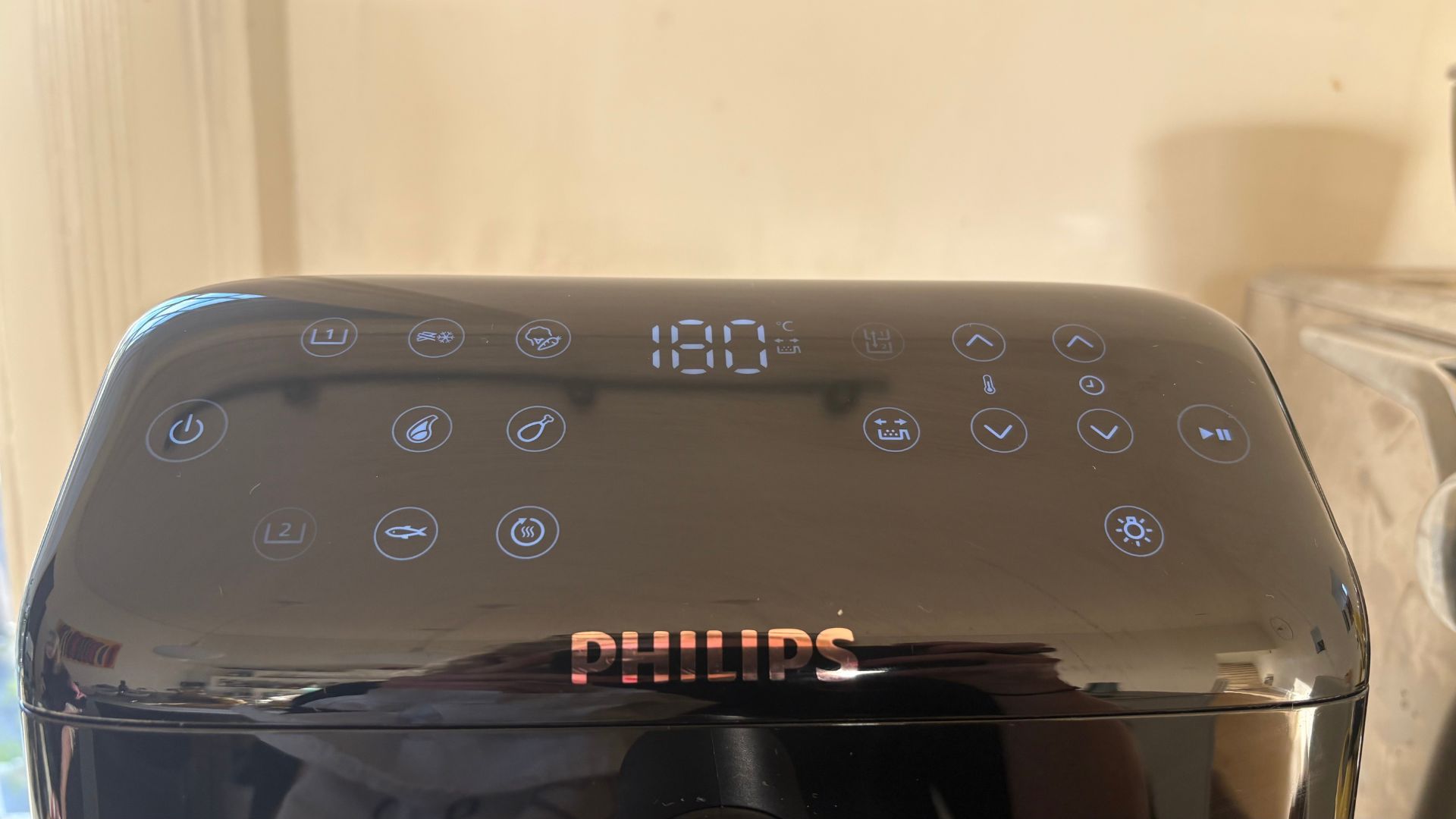
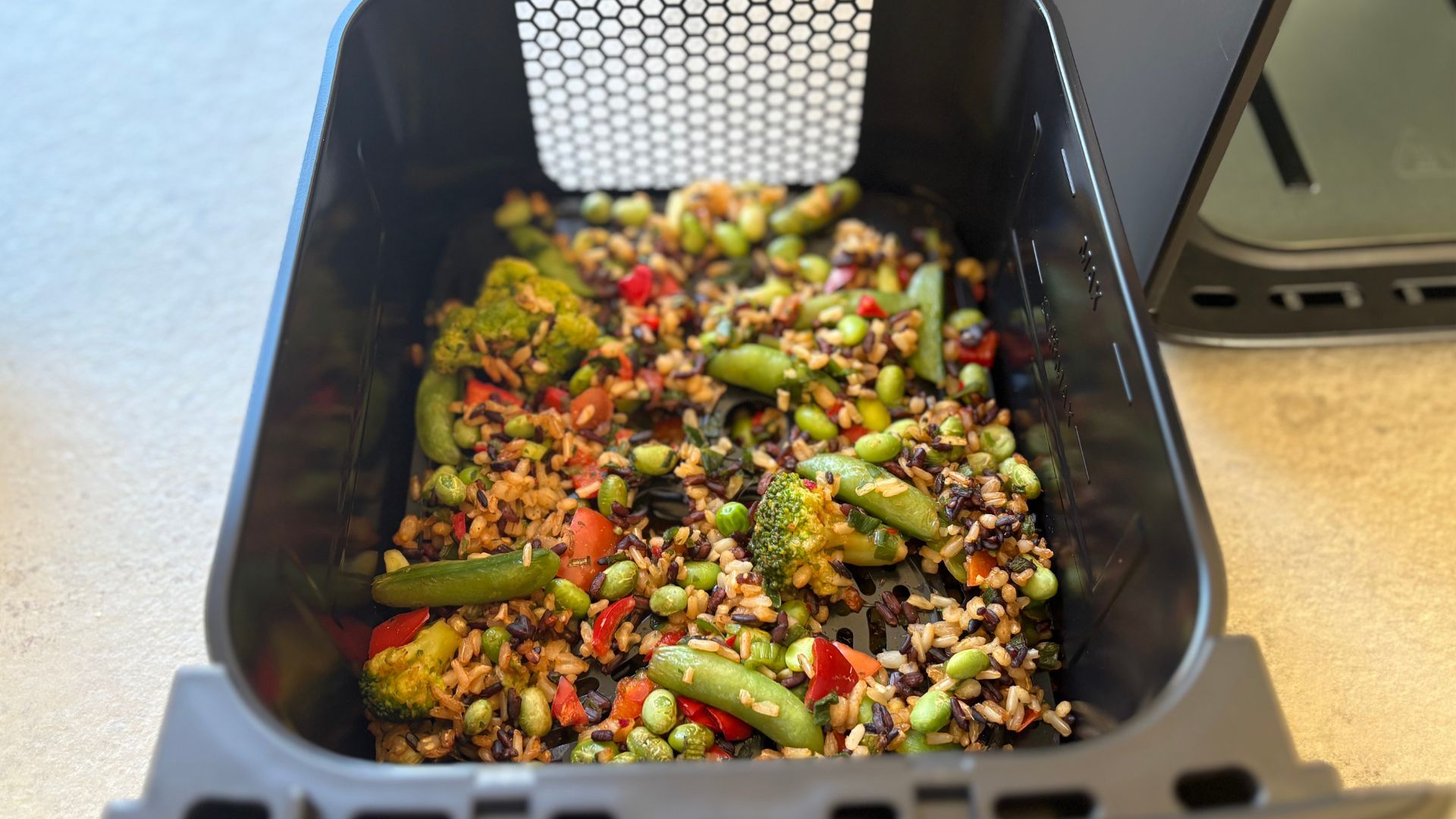
From the moment you switch it on, this air fryer feels reassuringly user-friendly. The control panel lights up clearly, responds quickly, and is genuinely intuitive, something I don’t say lightly after testing a lot of air fryers.
There’s a strong range of pre-sets for anyone who wants guidance, but I also loved how much control I had. I could adjust the timer minute by minute and tweak the temperature in precise 5-degree increments, which makes a real difference when you’re fine-tuning results.
My main word of caution, which comes up repeatedly in testing, is that the pre-sets err on the cautious side. They’re designed to guarantee crispness, but if you follow them blindly, you may end up with food that’s slightly more than golden.
(Image credit: Future)
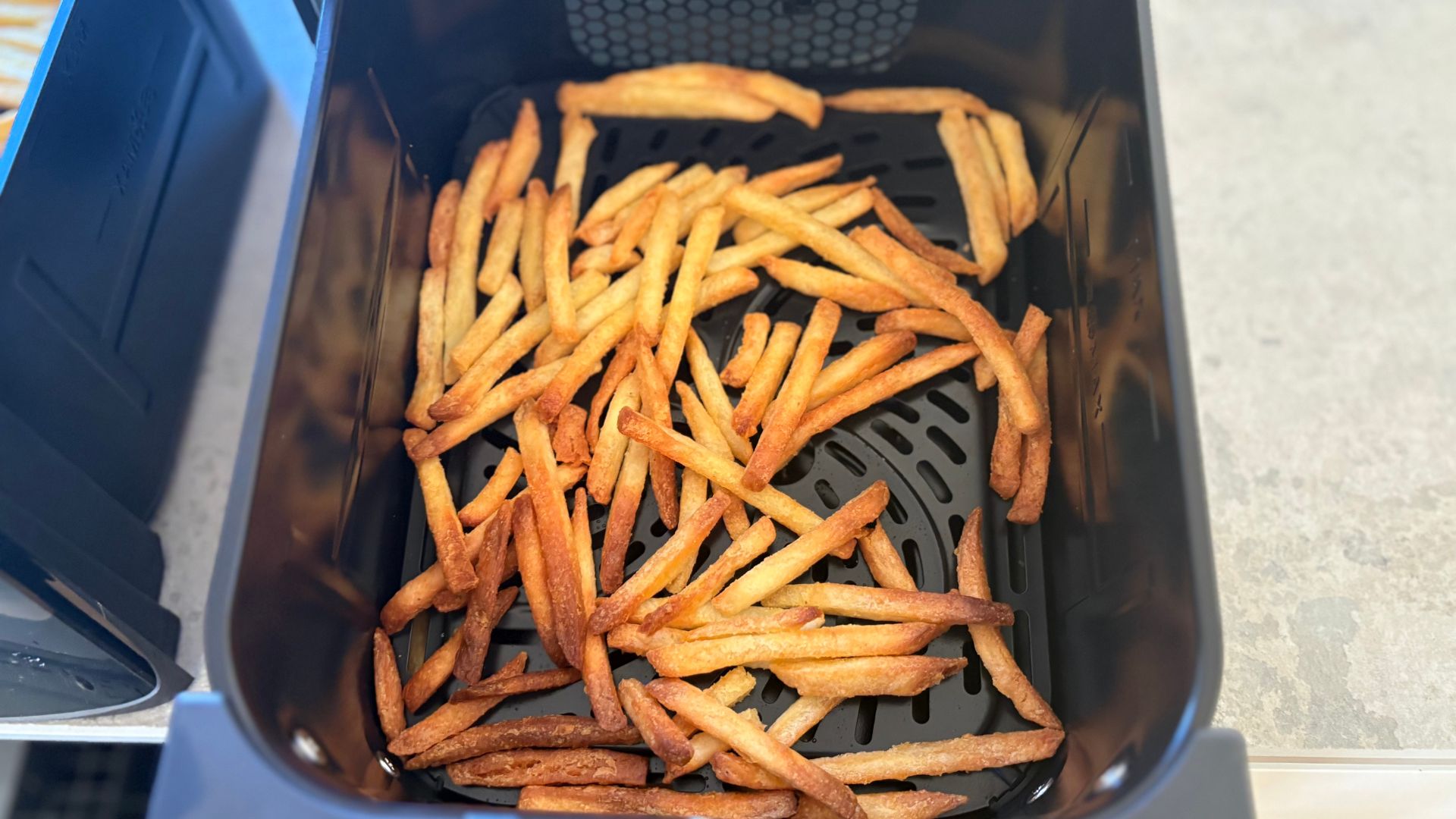
Chips are my non-negotiable first test. They’re the bread and butter of air frying: usually cooked from frozen, cooked in bulk, and a very clear indicator of how evenly heat circulates across the drawer.
I could comfortably fit around 300g of chips into a single drawer without overlap, meaning you could cook up to 750g across both baskets, an impressively family-friendly amount.
The chip pre-set recommends 23 minutes at 180°C, which is longer than my usual 18 minutes. I followed it exactly for fairness. The drawers light up during cooking (a feature I adored, nosy cooks, rejoice), allowing me to keep an eye on progress.
At 23 minutes, most of the chips were crisp and golden, but a noticeable section tipped just past perfection into overdone territory. When I re-tested at 18 minutes, the results were spot on: evenly cooked, fluffy inside, crisp outside. Lesson learned: trust your instincts and shave a few minutes off.
(Image credit: Future)
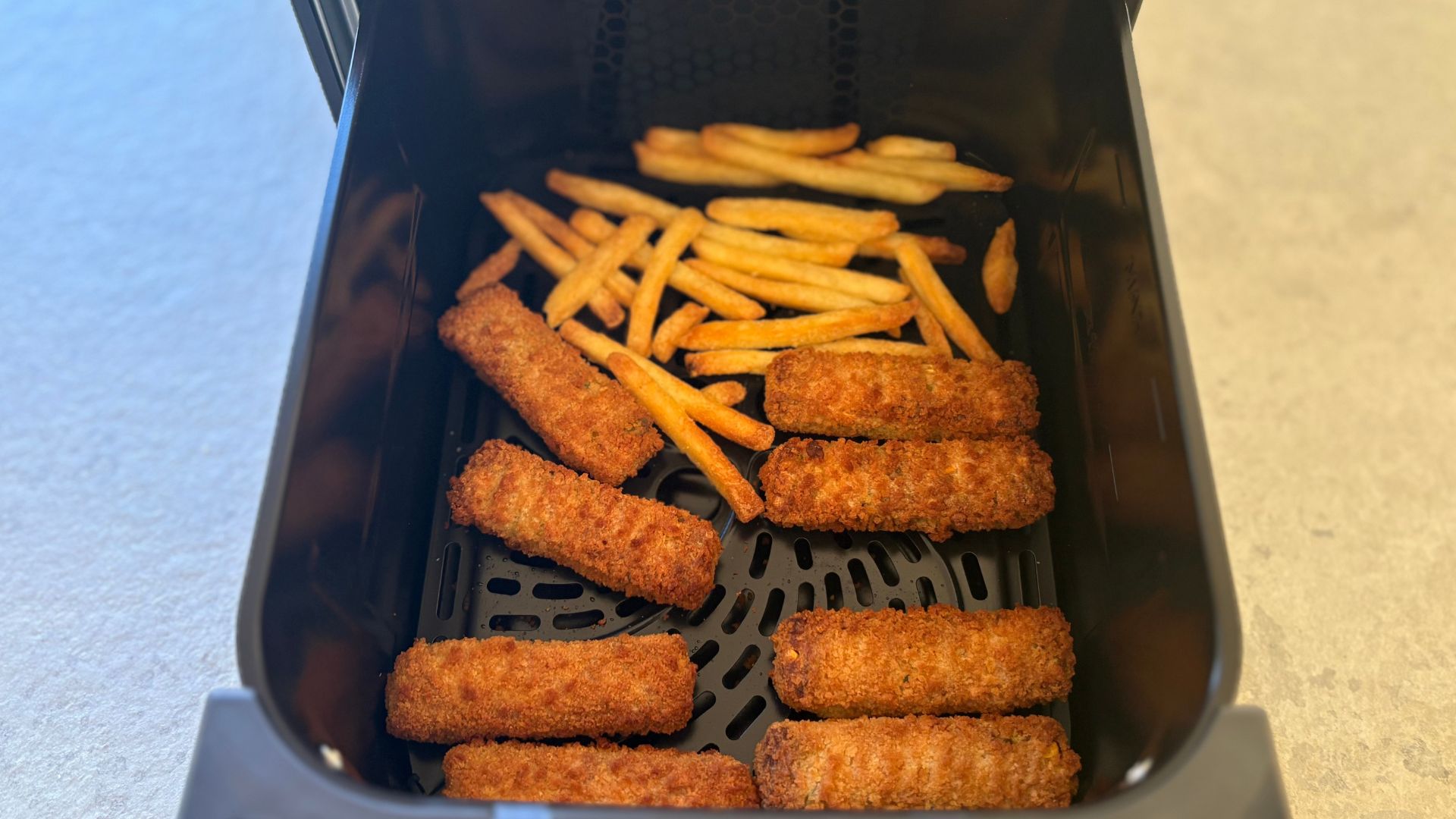
Fish fingers are rarely cooked alone, so I paired eight of them with chips. Just one drawer produced enough food to feed two people comfortably, which really highlights how capable this air fryer is.
Using the pre-set again delivered piping-hot, moist fish with a satisfying crunch. However, just like the chips, a few pieces leaned a little too crunchy at the edges. Knock a couple of minutes off, and they’re excellent.
(Image credit: Future)
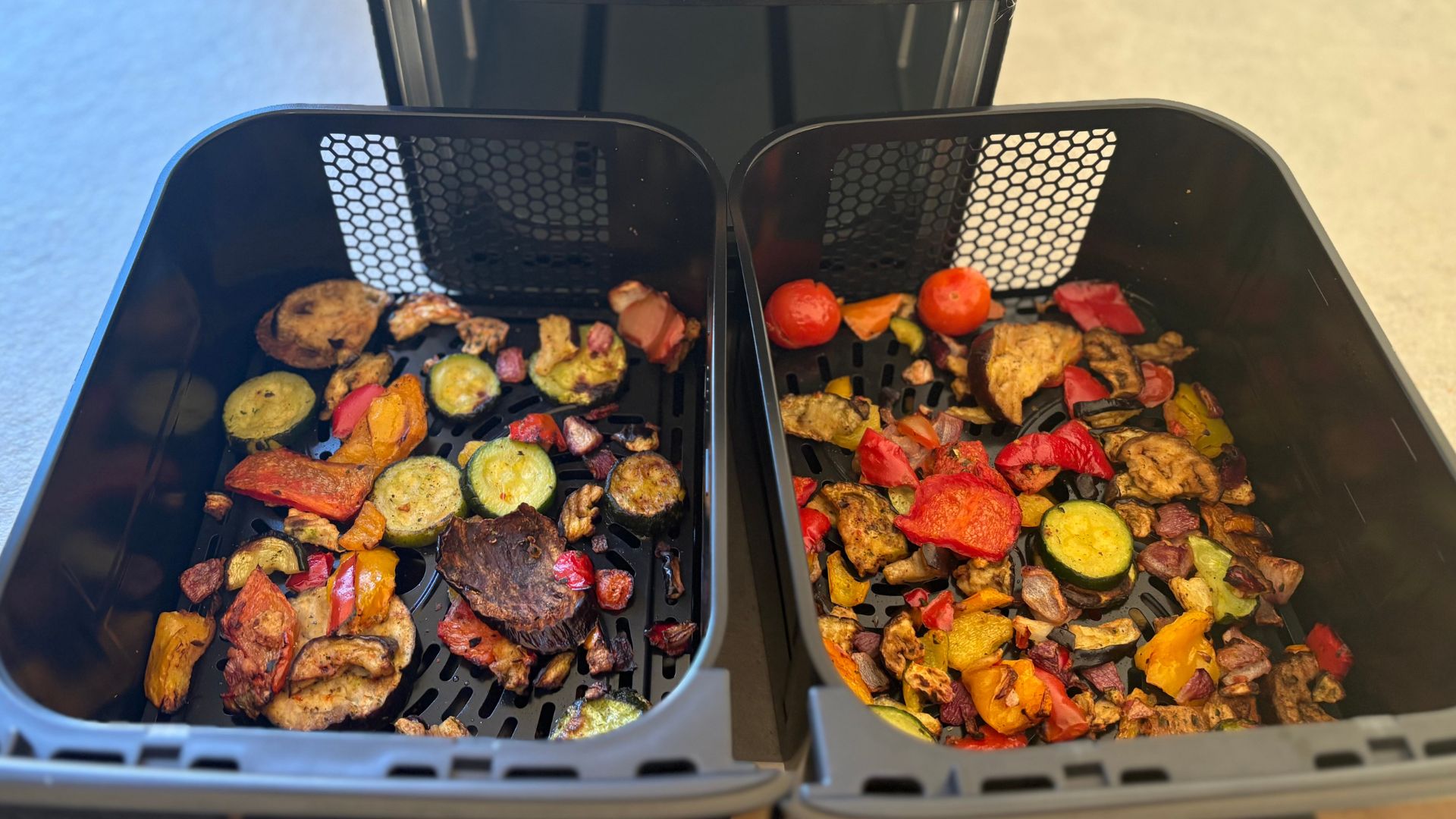
Vegetables are more delicate, so I manually set the temperature and time, basing it on the Philips pre-heat recommendation but halving the cooking time.
The results were excellent. The vegetables were evenly cooked across both drawers, tender in the centre, steaming hot, with just-caught edges that delivered intentional caramelisation rather than dryness. This was one of the most convincing tests and showed how controlled and consistent the heat really is.
(Image credit: Future)
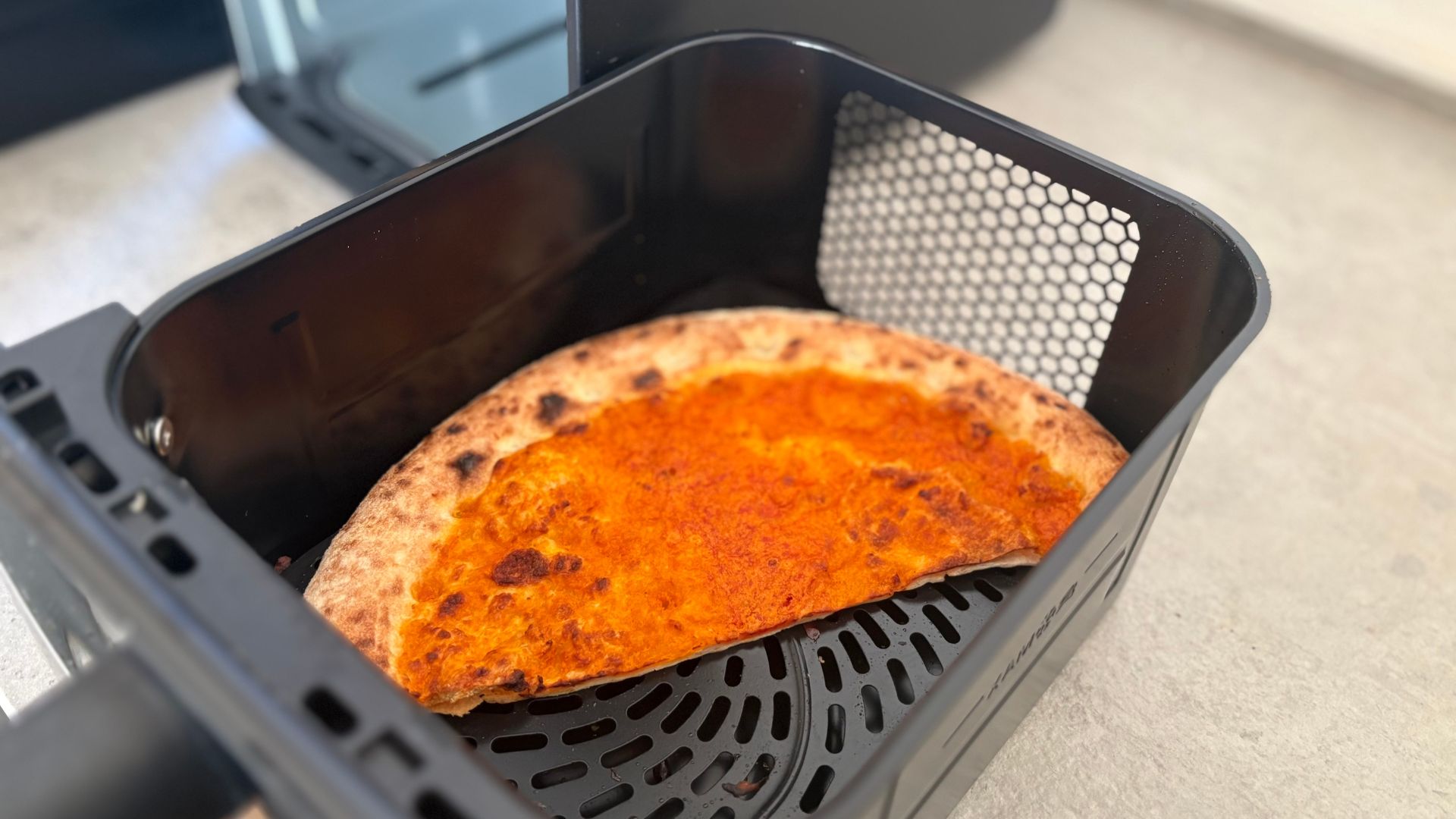
Pizza is all about gentle, even heat. The first pizza cooked so well (melted cheese, golden bubbling, soft crust) that I didn’t have leftovers to test reheating.
Each drawer fits one pizza comfortably, though you can’t cook multiple pizzas at once like you can in larger air fryer ovens. Still, the results were excellent.
For the reheat test, I used a marinara, notoriously easy to dry out. Coming from a family-run pizza business, we’re picky, and this passed with flying colours: warm through, not dried out, with a lovely balance of crisp base and doughy crust.

(Image credit: Future)
I couldn’t resist a sweet test, so I baked a chocolate banana loaf. My small tin just fit diagonally, so if baking is a priority, definitely measure your tins beforehand.
The cake cooked in 30 minutes and came out beautifully: moist, fluffy, evenly baked and genuinely one of the best air-fryer cakes I’ve made.
How to clean the Philips 4000 Series Stacked Dual Basket Airfryer
(Image credit: Future)
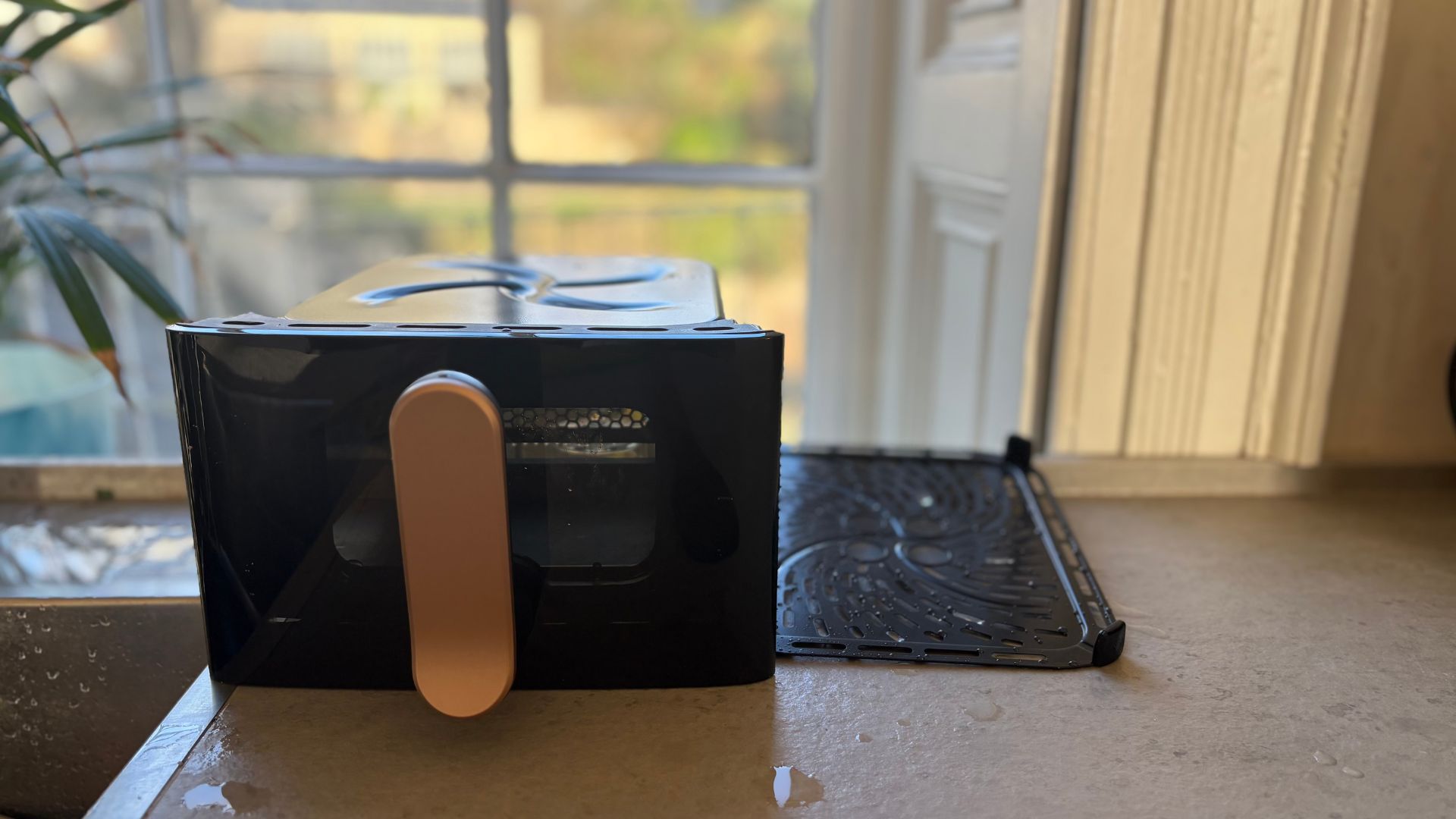
Clean-up is refreshingly straightforward. Both drawers and inserts are dishwasher-safe, so you can stack them in and forget about them. I usually hand-wash air fryer drawers to prolong their life, and these cleaned easily with warm soapy water, no stubborn grease or baked-on residue after testing.
Should you buy the Philips 4000 Series Stacked Dual Basket Airfryer?
(Image credit: Future)
If you want a smart, reliable, space-saving air fryer that actually delivers on performance, the Philips 4000 Series Stacked Dual Basket Air Fryer is a standout option. It’s one of the best stacked air fryers I’ve tested, and a genuinely strong contender for the best air fryer for a family.
Just be prepared to tweak the pre-sets slightly: once you do, it’s hard to fault. Thoughtful design, excellent capacity, and consistently strong results make this an air fryer I’d happily keep on my counter.
How we test air fryers
At woman&home, we have a series of standardised tests that we put every air fryer through to make sure that they are up to scratch. These tests cover everything from your classic chips and fish fingers (the perfect way to check that you can finesse dinner from frozen) through to grilling vegetables and baking cakes. The aim of the tests is simple: cover fast, slow, and consistent cooking, so that you can see whether the air fryer that you’re reading about will work with your lifestyle.
Of course, it’s important to understand other aspects of the air fryer too: whether it looks good, what it’s like to use, how easy it is to clean, and more. All in all, we like to think that each review covers off the crucial things you need to know. If you want to find out more, you can visit our dedicated page for how we test air fryers.